

 English

Crash Testing Protocols Explained: How NCAP, IIHS, and Euro NCAP Shape Vehicle Safety
 June 9, 2025
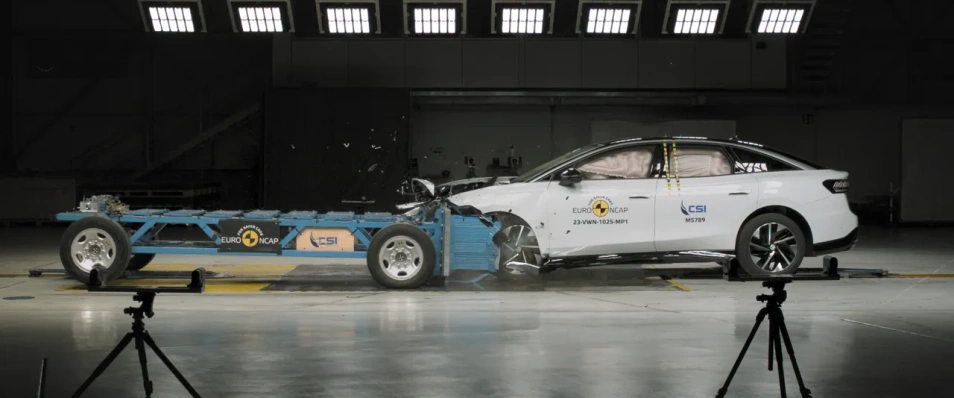
Ever wondered how your car gets its 5-star safety rating? Behind that badge is a rigorous process of crash testing that pushes vehicles to their limits — literally. As road safety becomes a top priority for both automakers and regulators, independent crash testing programs like NCAP, IIHS, and Euro NCAP are shaping the way vehicles are built and marketed across the globe.
In this article, we’ll break down:
What crash testing is and why it matters
Key protocols and their differences
How test results impact consumers and manufacturers
Where crash testing is headed in the era of EVs and automation
What is Crash Testing?
Crash testing is a controlled method of simulating car accidents to understand how vehicles behave during a collision. The goal is to:
Assess structural integrity
Analyze occupant protection systems (e.g., seatbelts, airbags)
Collect data from instrumented crash test dummies
Evaluate post-crash safety features, such as fuel system integrity or door functionality
Manufacturers and independent agencies perform these tests to identify weak points in vehicle design and improve crash survivability.
Common Crash Test Types
Here are the primary crash scenarios used around the world:
1. Frontal Crash Test
Simulates a head-on collision at around 56 km/h (35 mph).
In Japan's NASVA (National Agency for Automotive Safety & Victims’ Aid) protocol, a vehicle crashes into a deformable barrier offset from the center.
Measures head, neck, chest, and leg injuries for both driver and front passenger.
2. Side Impact Test
Simulates a vehicle being struck from the side, such as in an intersection accident.
A moving barrier hits the side of the stationary vehicle.
Critical because side doors offer limited crumple zones.
3. Rear Impact Test
Less common in global protocols, but essential to assess whiplash and seatback strength.
Often simulated via sled tests or controlled rear collisions.
4. Pole Impact Test (Side Pole Crash)
Represents a collision with a narrow object like a tree or pole.
The car is propelled sideways into a rigid pole at high speed.
Critical for evaluating head protection, especially with curtain airbags.
5. Pedestrian Protection Test
Evaluates how vehicle fronts (hood, bumper) protect pedestrians in the event of a crash.
Simulated using dummy legs and heads launched at the vehicle.
Required by programs like Euro NCAP and NASVA.
Inside the Test Lab: What Happens During a Crash Test?
Crash tests involve more than just smashing cars. Behind each crash is a data-rich, high-tech process:
Crash Test Dummies (ATDs): These sophisticated human surrogates are loaded with accelerometers, sensors, and load cells to measure injury forces.
High-Speed Cameras: Capture the crash in slow motion to assess structural deformation and airbag timing.
Sensors: Measure forces acting on the dummy’s body and analyze internal cabin pressure, seatbelt loads, and head impact zones.
Global Crash Test Programs Compared
🇯🇵 NASVA (Japan)
Focuses on occupant safety and pedestrian protection.
Uses a full-scale offset frontal crash and a moving barrier side impact test.
Provides visual ratings using stars for head, neck, and chest protection.
Publicly shares crash results to help consumers make safer vehicle choices.
🇺🇸 NHTSA (U.S. NCAP)
Government-led program with frontal, side, and rollover resistance tests.
Ratings range from 1 to 5 stars.
Less emphasis on pedestrian protection (changes coming in 2025).
🇪🇺 Euro NCAP (Europe)
Comprehensive star rating based on 4 categories: adult, child, pedestrian, and safety assist systems.
Continuously updates protocols to include active safety technologies like AEB (automatic emergency braking).
🇺🇸 IIHS (U.S. - Insurance Institute for Highway Safety)
Non-governmental, industry-funded program.
Introduced the small overlap front crash test — extremely challenging and revealing.
Rates vehicles from Good to Poor and awards “Top Safety Pick+” to the best performers.
Crash Testing Protocols Comparison
Test Type | NASVA (Japan) | IIHS (U.S.) | NHTSA / US NCAP | Euro NCAP (Europe) |
Frontal Crash | Offset frontal into deformable barrier at 64 km/h | Moderate overlap (40%) at 64 km/h Small overlap (25%) at 64 km/h | Full-width frontal at 56 km/h | Offset frontal at 64 km/h |
Side Impact | Moving 1.3 ton barrier at 55 km/h into driver’s side | 1.5-ton moving barrier at 58 km/h | 1.3-ton moving barrier at 62 km/h | 1.4-ton deformable barrier at 60 km/h |
Side Pole Impact | Yes – Side pole impact at 29 km/h | Yes – Side pole impact at 32 km/h | No | Yes – Side pole at 32 km/h |
Rear Impact (Whiplash) | Evaluated (sled method) | Yes – Simulated sled test for seat/headrest strength | No | Yes – Using seat sled and biofidelic dummies |
Pedestrian Protection | Yes – Head, upper/lower legform impacts | No | No (expected 2025 update) | Yes – Active bonnet, headform, legform testing |
Crash Dummies Used | Hybrid III & EuroSID II | Hybrid III, SID-IIs, THOR | Hybrid III | THOR, Q-series (children), legforms, others |
Child Occupant Safety | Evaluated using child dummies in CRS | Moderate focus | Limited | Comprehensive – various child seats and sizes |
Safety Assist (ADAS) | Planned in future NASVA updates | Partial – AEB, forward collision warning | Limited (expanding in 2025) | Yes – Includes AEB, LKA, speed assist, occupant status |
Rollover Test | No | Roof crush strength test | Dynamic rollover rating | No (some indirect measures included) |
Rating System | Star rating per body part (Head, Neck, Chest) | Good, Acceptable, Marginal, Poor | 1–5 Star Rating | Overall 0–5 Stars across 4 categories |
Focus | Occupant & pedestrian safety, crashworthiness | Structural crashworthiness, small overlap, ADAS | Basic crashworthiness and rollover | Full-spectrum safety including ADAS and pedestrians |
Key Notes:
NASVA (Japan) focuses heavily on passenger safety and pedestrian protection, with very transparent public reporting.(https://www.nasva.go.jp/mamoru/en/assessment_car/crackup_test.html)
IIHS pioneered the small overlap crash test, which is more severe and better reflects some real-world crashes (https://www.iihs.org/ratings/about-our-tests/test-protocols-and-technical-information)
NHTSA provides a broader but more basic view of crashworthiness, although it's updating to include active safety features. (https://www.nhtsa.gov/ratings)
Euro NCAP is the most comprehensive, integrating passive and active safety systems, child protection, and vulnerable road user metrics. (https://cdn.euroncap.com/media/57827/euro-ncap-assessment-protocol-aop-v911.pdf)
Why Crash Tests Matter
According to Gerber Collision & Glass, crash testing has had a measurable impact on automotive safety:
Structural improvements reduce cabin intrusion, saving lives.
Airbag placement and timing are fine-tuned through test feedback.
Restraint systems are calibrated to better protect adults and children.
Headrest and seat designs reduce whiplash in rear-end collisions.
Crash testing protocols force automakers to innovate stronger frames, smarter airbags, better crumple zones, and advanced sensors are all born in the lab and proven through these tests.
How Crash Ratings Affect Buyers and Brands
Consumers use crash ratings as a buying guide—a higher score builds trust.
Automakers promote top scores in ads and brochures.
Poor scores can harm brand reputation and sales.
In Japan, for example, NASVA test results are available on the official website, making safety performance fully transparent to buyers.
Crash Testing in the Age of EVs & Automation
Crash testing is evolving alongside vehicles:
EV Batteries: Tests now include checks for fire risk, high-voltage insulation, and battery pack containment.
Autonomous Systems: Testing includes evaluating how systems respond before and during crashes.
Virtual Simulation: Increasing use of computer models to reduce real-world test volume and test edge cases.
Programs like Euro NCAP and NASVA are incorporating new test types to address emerging risks in electrified and automated mobility.
Conclusion: Trust in the Stars
Crash testing protocols are not just about smashing cars—they’re about saving lives. Through a mix of rigorous tests, high-tech tools, and constant innovation, programs like NASVA, IIHS, Euro NCAP, and NHTSA ensure that today’s cars are safer than ever before.
As vehicles become more intelligent, connected, and electric, these tests will only grow in importance—keeping drivers, passengers, and pedestrians safer on the road.