


 English

From Cradle to Grave: The Role of LCA in Automotive Product Compliance and Innovation
 November 2, 2025
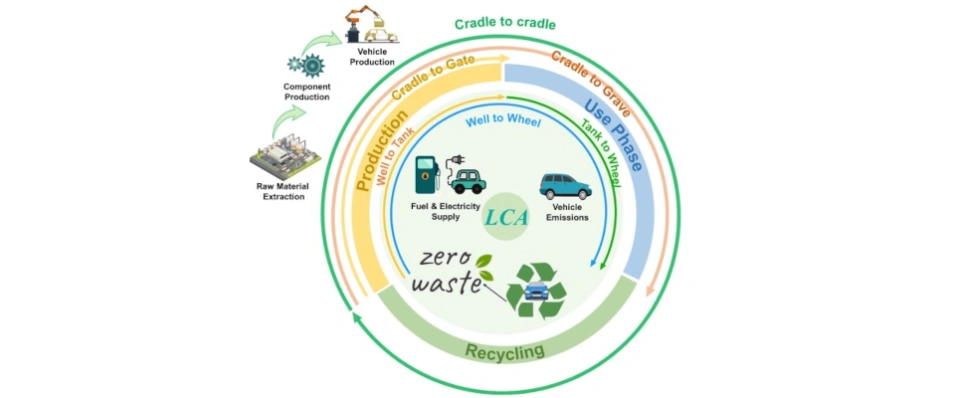
The automotive industry is undergoing a transformation. Electrification, circular economy initiatives, and stricter environmental regulations are reshaping how vehicles are designed, manufactured, and recycled. At the center of this change is Life Cycle Assessment (LCA) — a structured method for evaluating a product’s environmental impact from cradle to grave.
For manufacturers and suppliers, LCA is no longer optional. It has become a critical tool for achieving compliance with regulations, meeting customer sustainability expectations, and driving innovation in automotive design.
What is Life Cycle Assessment (LCA)?
Life Cycle Assessment (LCA) is a standardized methodology (ISO 14040/14044) used to analyze the environmental impacts of a product throughout its life cycle:
Raw material extraction (mining, refining, sourcing)
Manufacturing and processing (energy, emissions, material efficiency)
Distribution and use phase (fuel consumption, EV charging, maintenance)
End-of-life (recycling, disposal, circularity strategies)
This cradle-to-grave analysis gives a full picture of a product’s environmental footprint — including CO₂ emissions, resource use, and potential for pollution.
LCA as a Compliance Driver
The rise of global environmental regulations makes LCA an essential part of automotive product compliance. For example:
EU Green Deal & Fit for 55: Pressure to cut lifecycle emissions, not just tailpipe CO₂.
Battery Passport Regulations (EU): Mandating LCA data for EV batteries, covering carbon footprint from raw materials to recycling.
Extended Producer Responsibility (EPR) laws: Holding automakers accountable for vehicle end-of-life management.
OEM requirements: Many automakers already demand LCA reports from suppliers to verify sustainability claims.
Without credible LCA data, suppliers' risk being excluded from global supply chains
LCA as a Catalyst for Innovation
Beyond compliance, LCA empowers innovation in automotive design and engineering:
Material selection: Identifying low-impact alternatives (e.g., recycled aluminum, bio-based plastics).
Lightweighting strategies: Balancing durability with reduced environmental footprint.
Energy-efficient manufacturing: Shifting to renewable energy or closed-loop production.
Design for circularity: Incorporating recyclability and reuse into early product development.
By integrating LCA insights into CAD and product validation, companies can design with sustainability in mind — before a prototype is ever built.
The Competitive Advantage of LCA Readiness
Suppliers who embrace LCA early gain:
Regulatory resilience: Prepared for evolving global compliance frameworks.
Customer trust: Meeting OEM sustainability targets and preferred supplier criteria.
Cost savings: Efficiency gains in energy, materials, and logistics.
Brand reputation: Demonstrating genuine commitment to sustainability.
In a market where sustainability is as critical as safety or performance, LCA readiness is becoming a core business requirement.
Conclusion: From Compliance to Leadership
From cradle to grave, LCA is the foundation of sustainable automotive product development. It transforms compliance from a burden into an opportunity for innovation, efficiency, and customer value.
For OEMs and suppliers alike, investing in Life Cycle Assessment capabilities today means building the competitive advantage of tomorrow.
Vinso Global Supports Environmental Compliance and Sustainability
At Vinso Global, we help manufacturers and suppliers navigate the complex landscape of environmental regulations while driving sustainability in product development. Our Environmental Compliance Services ensure that your products meet global requirements from cradle to grave.
We provide:
Global Market Compliance – staying ahead of diverse international regulatory frameworks.
IMDS Reporting – accurate material data submissions to support OEM requirements.
Conflict Mineral Reporting – transparency in sourcing and responsible supply chains.
LCA (Life Cycle Assessment) – evaluating environmental impacts from raw materials to end-of-life, supporting OEM and regulatory requirements.
ESG Services – integrating sustainability and corporate responsibility into your operations.
By combining compliance expertise with sustainability insights, Vinso Global enables companies to move beyond meeting regulations—turning environmental responsibility into a driver of innovation and competitive advantage.
#LifeCycleAssessment #EnvironmentalCompliance #SustainableManufacturing
#AutomotiveInnovation #IMDS #REACH #RoHS #CircularEconomy #VinsoGlobal